Advanced Glaucoma & Macular Degeneration Screenings in Bethel Park: What Early Detection Looks Like
Glaucoma and macular degeneration can begin before you notice a significant change in everyday vision. You may still read comfortably, drive, and see clearly on an eye chart while subtle changes are developing inside the eye. That is why comprehensive eye exams and appropriate diagnostic testing are important for patients with risk factors or suspicious findings.
At Advanced Vision Care in Bethel Park, we use modern diagnostic technology as part of comprehensive eye care. Advanced testing can provide additional information about the optic nerve, retina, and visual function so changes can be identified and monitored over time.
Glaucoma Screening Involves More Than Eye Pressure
Eye pressure, also called intraocular pressure, is an important glaucoma risk factor, but a pressure reading alone cannot determine whether someone has glaucoma.
Some people develop glaucoma even when their pressure falls within a commonly accepted range. Others may have elevated eye pressure without detectable optic nerve damage.
A glaucoma evaluation may consider:
Eye pressure measurements
The appearance of the optic nerve
Optical coherence tomography, or OCT, when indicated
Visual field testing to evaluate peripheral vision
Corneal thickness
Family history and other glaucoma risk factors
Comparison with previous examination findings
Looking at these findings together gives your Bethel Park eye doctor more information than relying on one test alone.
How OCT Helps Evaluate the Optic Nerve
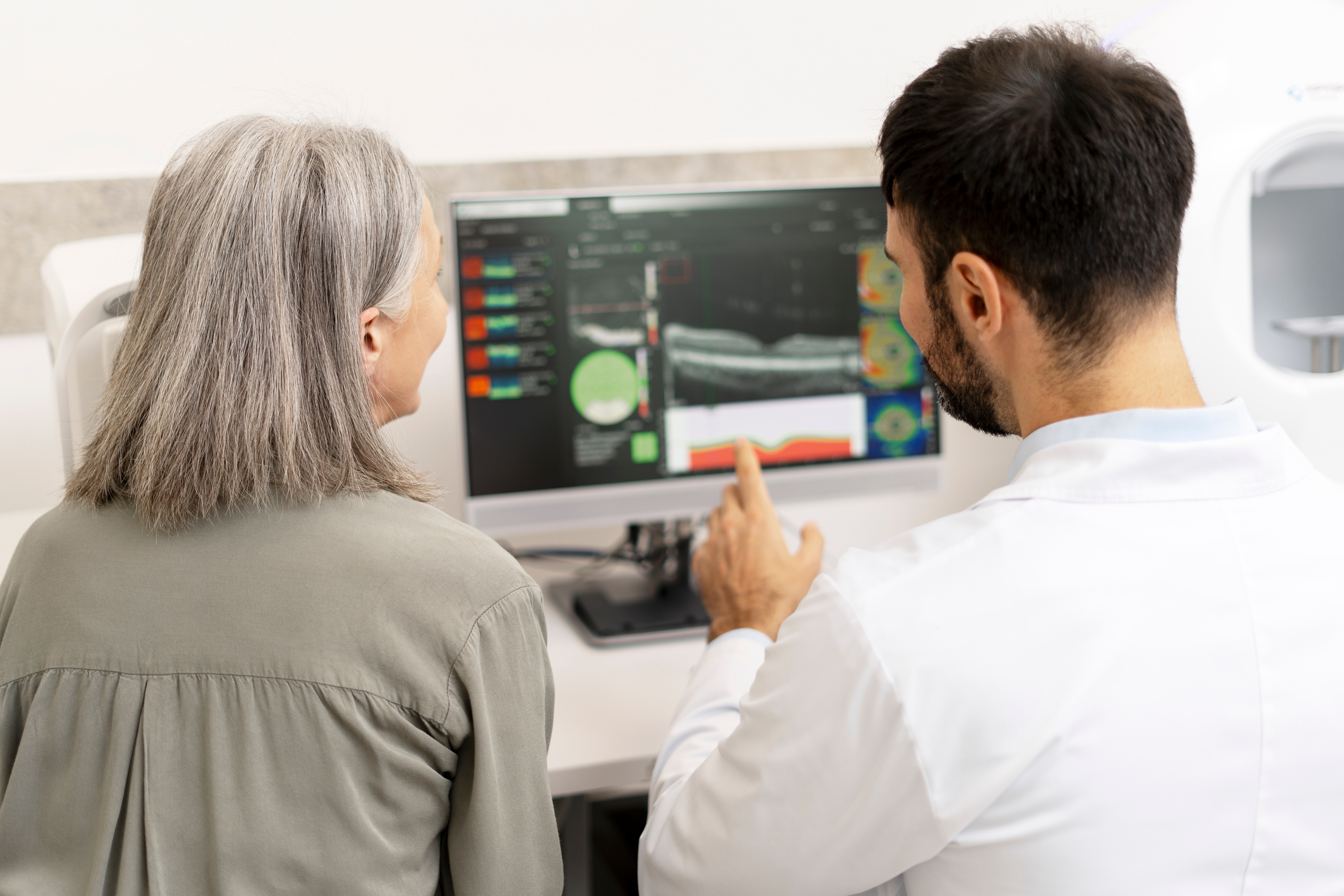
OCT is a noninvasive imaging technology that creates detailed cross-sectional images of structures inside the eye.
For glaucoma monitoring, OCT can help evaluate the retinal nerve fiber layer and structures around the optic nerve. Repeating scans over time may help your eye doctor determine whether measurements appear stable or are showing meaningful change.
Imaging does not replace the rest of the glaucoma evaluation. Eye pressure, visual fields, optic nerve examination, and other clinical findings remain important parts of understanding overall risk.
What Early Macular Degeneration Detection Looks Like
Age-related macular degeneration, or AMD, affects the macula, which provides the detailed central vision used for activities such as reading and recognizing faces.
Early AMD may cause few noticeable symptoms. During an eye exam in Bethel Park, your doctor can evaluate the macula for changes that may warrant monitoring or additional testing.
Retinal imaging and OCT can provide detailed views of the macular area. These technologies may help document changes and identify structural findings that cannot be evaluated by checking visual acuity alone.
Depending on your history and examination findings, dilation may also be recommended. Retinal imaging can complement a dilated retinal examination, but it does not automatically replace dilation when a wider or more detailed view of the retina is clinically necessary.
Why Comparing Tests Over Time Matters
Early detection often depends on identifying change rather than finding one dramatic abnormality.
A baseline OCT scan, retinal image, or visual field test gives your eye doctor something to compare with future results. If a finding remains stable, continued monitoring may be appropriate. If testing shows progression, your doctor can discuss whether additional evaluation, treatment, or referral is needed.
This is especially important with glaucoma because peripheral vision loss can develop gradually. Macular changes can also progress before they noticeably interfere with everyday activities.
Know Which Vision Changes Need Faster Attention
Routine monitoring is different from urgent eye care. Sudden vision loss, a new dark or distorted area in central vision, a curtain-like shadow, or a sudden increase in flashes or floaters should receive prompt professional evaluation.
If you have a family history of glaucoma or macular degeneration, have been told your eye pressure or optic nerve needs monitoring, or simply want a more complete picture of your eye health, schedule a comprehensive eye exam with Advanced Vision Care at 681 McMurray Road, Bethel Park, PA 15102 by calling (412) 835-7474.
Helpful Articles
All Eye Care Services
Find personalized eye care excellence with our comprehensive services. From eye exams to advanced diagnostics, trust us for all your vision needs.

Keep In Touch
For non-urgent questions or to learn more about our services, contact us today!
© 2026 Advanced Vision Care. All rights Reserved - Accessibility Statement - Privacy Policy - Sitemap
Managed and Designed by 